
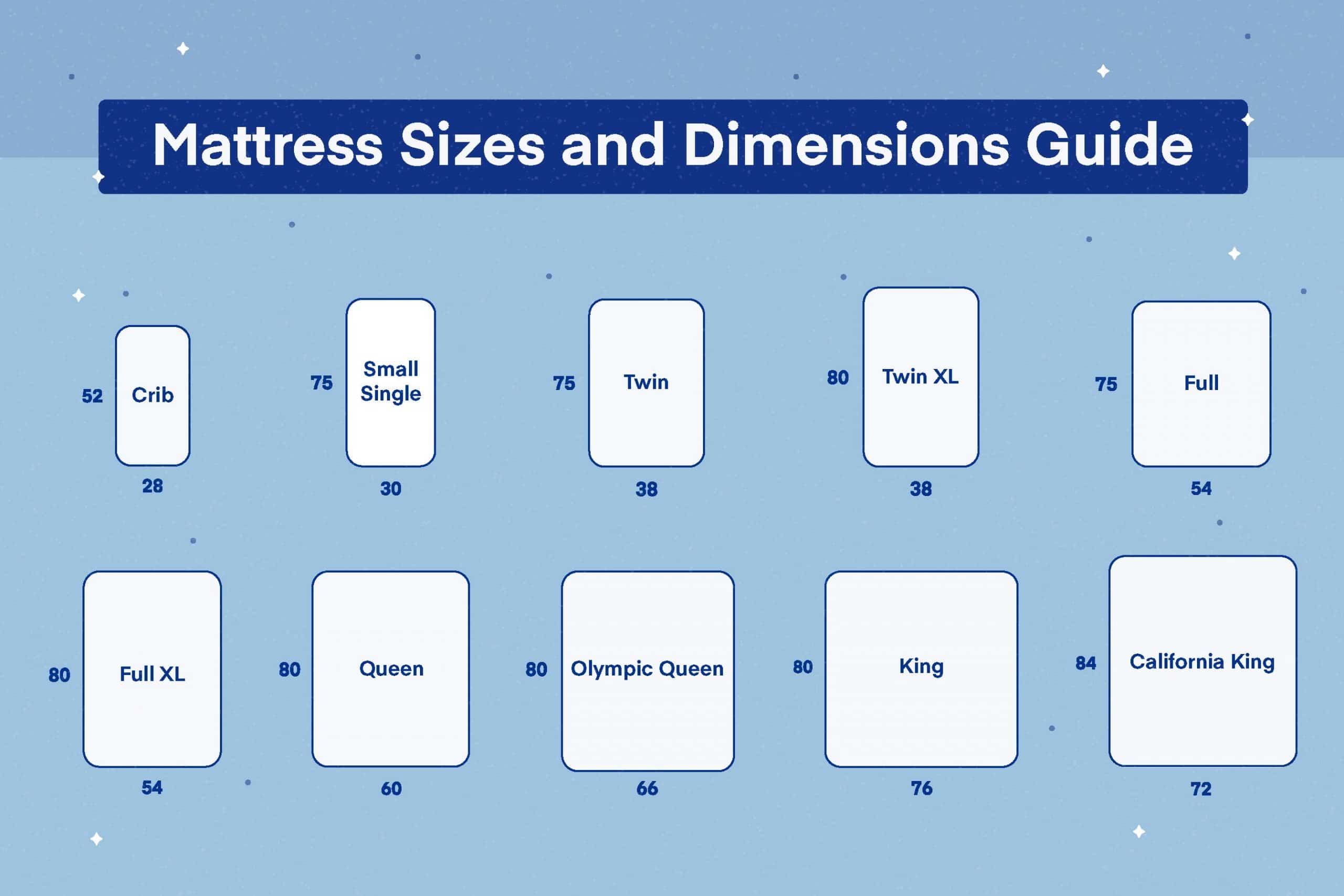
Mattress Sizes and Dimensions Chart
| Mattress Size | Dimensions in Inches | Dimensions in Centimeters |
|---|---|---|
| California King | 72" X 84" | 183 X 213.5cm |
| King | 76" X 80" | 193 X 203.5cm |
| Olympic Queen | 66" X 80" | 167 X 203.5cm |
| Queen | 60" X 80" | 152 X 203.5cm |
| Full XL | 54" X 80" | 137 X 203.5cm |
| Full | 54" X 75" | 134.5 X 190.5cm |
| Twin XL | 38" X 80" | 96.5 X 203.5cm |
| Twin | 38" X 75" | 96.5 X 188.0cm |
| Small Single | 30" X 75" | 76.2 X 190.5cm |
| Crib | 27.25" X 51" | 69.2 X 129.5cm |
Apart from the texture and feel, there is another very important facet of your mattress which influences your choice—the size. Getting the right size mattress is one of the crucial determinants leading towards the ultimate goal of a good night’s sleep.
When looking for a new mattress, navigating the mattress market is crucial to ensure you find the perfect fit for a good night’s sleep.
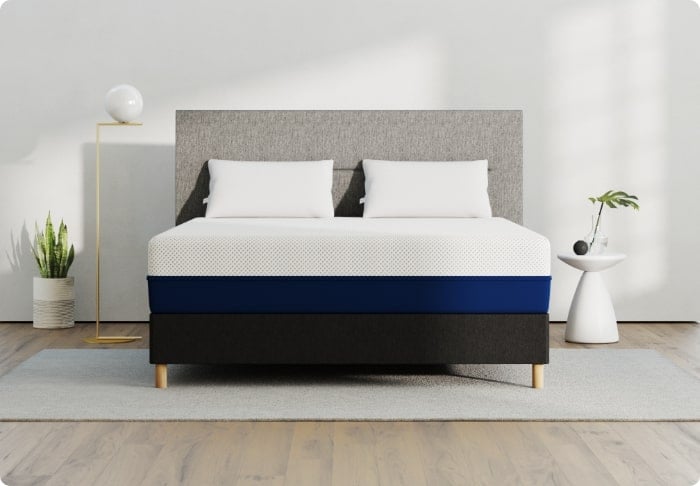
Save $450 On Any Mattress

Plus free shipping
Choosing the right size from a plethora of options can be difficult, especially when there are sub-categories like mattress thickness that add an extra layer of consideration. With very little difference in dimensions between certain sizes and variations in thickness, getting the right fit for yourself can be a daunting task.
Want to discover the best mattress of 2024? Read here.
The size of your bedroom and your budget are key factors in your decision-making process when looking for the ideal bed size. In this mattress sizes and dimensions guide, we will discuss the different mattress sizes available and the recommended room size for each of them to help you choose the most-fitting mattress size. For most homes though, a Queen size mattress (60” x 80”) is the most popular option but plenty of people opt to go smaller with Full size mattresses (54” x 75”) or larger Kings (76” x 80”).
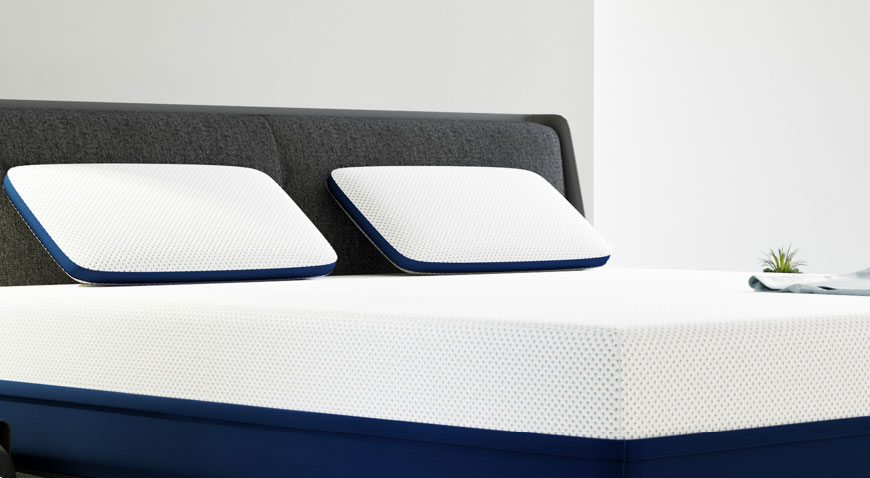
Standard Mattress Sizes
Most mattress brands offer the following six sizes.
California King Size Bed Dimensions
 72 inches by 84 inches
Minimum recommended room size: 12 feet by 12 feet
The California king size is the one of the longest bed sizes available (in terms of standard mattress sizes). It is 4 inches longer than the king size but is also 4 inches narrower. So technically what you gain in length, you lose in width in a California king bed— but the extra length makes it suitable for tall sleepers. California king beds can accommodate two sleepers comfortably and sometimes an extra sleeper as well, like parents co-sleeping with their child. This makes it a good choice for families.
King Size Bed Dimensions
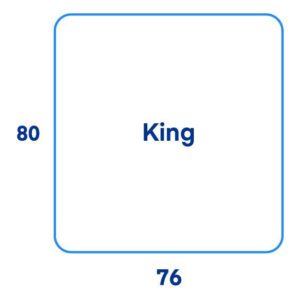
76 inches by 80 inches
Minimum recommended room size: 12 feet by 12 feet
Sleeping on a king size bed is sleeping in luxury. There is enough room for two sleepers to sprawl and sleep in their own space. It provides 4 inches of extra width than the California King, but it’s 4 inches smaller in length. King mattresses are the widest available standard size, making it a good choice for families— if parents want to co-sleep with their children, this size can accommodate them.
Queen Size Bed Dimensions
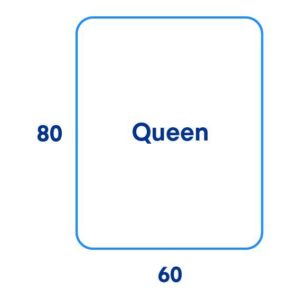
60 inches by 80 inches
Full Size Bed Dimensions
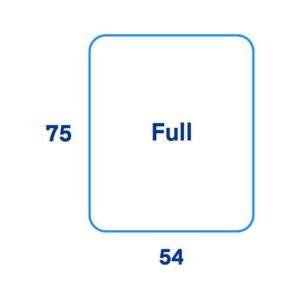
54 inches by 75 inches
Minimum recommended room size: 9 feet 6 inches by 10 feet 6 inches
A full-size mattress is best suited for a single sleeper. For couples, a full size mattress might not be a good choice for a comfortable sleep, but for an individual, this provides enough space to sleep comfortably and also fits into most rooms without making it look crowded. This size can also serve as a good option for a spare bed.
Twin XL Size Bed Dimensions
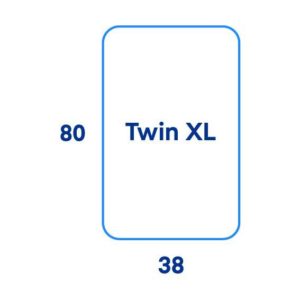 38 inches by 80 inches
Minimum recommended room size: 9 feet 6 inches by 10 feet 6 inches
This size is 5 inches longer than the standard twin size, making it a preferred choice for taller individuals. The twin XL size is always a good option to accommodate extra guests on short notice. Since they don’t require much space and are less expensive than a queen or a full, it won’t be difficult to have one as a spare.
Twin Size Bed Dimensions
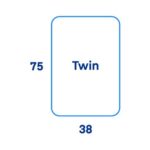 38 inches by 75 inches
Minimum recommended room size: 7 feet by 10 feet
The smallest of all standard sizes, this is one of the most common beds available. The twin size mattress is good for children and teens alike, accommodating children in their growing stages.
However, a twin or single size mattress may not be a good fit for a full-grown adult. It is a good size to fit into smaller rooms, and ideal for bunk beds, too.
Please note: Our Amerisleep twin size mattresses measure 38 inches by 74 inches.
Other Mattress Sizes
These sizes can be trickier to find, with many of them requiring you to order a custom mattress from a manufacturer.
Olympic Queen Mattress Dimensions
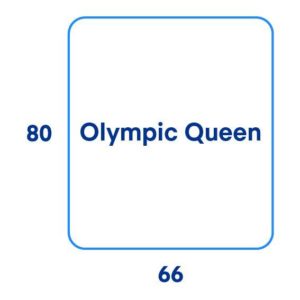
66 inches by 80 inches
Full XL Size Bed Dimensions
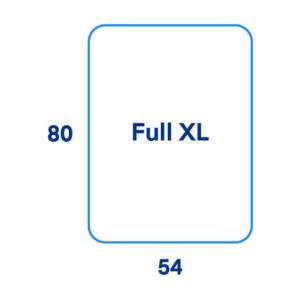
54 inches by 80 inches
Minimum recommended room size: 9 feet 6 inches by 10 feet 6 inches
The full XL size has an extra 5 inches in length than a standard full. The extra legroom makes it a good fit for taller individuals sleeping by themselves. It can also be a good choice for a spare bed in your guest room, although some hosts prefer to offer a standard queen size mattress to accommodate couples.
Small Single Size Bed Dimensions
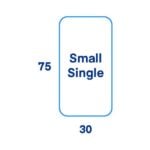
30 inches by 75 inches
Minimum recommended room size: 7 feet by 10 feet
Single mattresses and twin mattresses have the same dimensions, so these terms are often used interchangeably. However, the “twin” size is much more common nowadays, so if you have your eye on a single bed, a twin is just what you need.
Crib Size Bed Dimensions
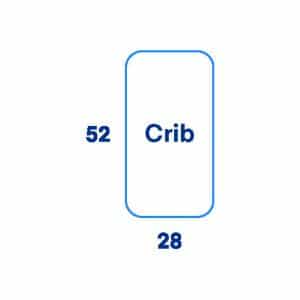
27.25 inches by 51 inches
A crib size mattress is approximately 6 feet by 4 feet and only meant to fit inside a crib. The standard crib mattress size is regulated by the federal government for safety reasons. So it’s pretty easy to find crib size sheets that fit your mattress, as long as the crib mattress you choose is up to the current standards.
A crib size mattress should not be more than 6 inches thick. Ideally a crib size mattress should also offer a firm feel to support an infant’s body.
Key Takeaways
- Standard and Non-Standard Mattress Sizes: There are six common standard mattress sizes available, ranging from the largest California King to the smallest Crib size. There are also less-common, nonstandard variations and oversized mattresses. The choice of size should depend on your space, sleeping preferences, and the number of sleepers.
- California King vs. King Size: California King beds are longer but narrower than King size beds, making them suitable for tall individuals. Both sizes can accommodate couples comfortably, and they also come with a split option for partners with different mattress preferences.
- Queen, Full, Twin XL, and Twin Sizes: Queen size mattresses are popular for couples, while Full size is suitable for a single sleeper. Twin XL is a longer option preferred by taller individuals, and Twin size is common for children and teens. Each of these sizes has its own advantages and can fit various room sizes and sleeping needs.
Other Mattress Size Factors that Influence Your Decision
Buying a mattress is a long-term investment in your health, and there are a number of things to think about during your search for the best mattress.
Bed frames are also an essential component when purchasing a mattress, as they provide crucial support and stability. Almost all mattress types (memory foam, latex, innerspring, and hybrids) are available in all standard sizes, but factors like the size of your bedroom also have to be considered while deciding on the size of your mattress.
Who’s Using the Mattress
This is one of the most critical factors to be considered while choosing the perfect mattress size. If you are an individual sleeper who does not share a bed with anyone, you can eliminate king and California king mattresses from your list— queen, full, or full XL beds would likely be the most fitting. We recommend queen and full XL mattresses to those who prefer some space to sprawl, and full and twin XL options to sleepers who need to save space.
However, if you plan on sharing your mattress with a partner or child, you’ll want to choose a queen, king, or California king. If you and your partner like to co-sleep with your children, a king or California king would be better accommodating.
Size of the Room
Keep in mind that your bedroom does not comprise just your bed. You need to leave space for movement and other comfortable furniture. The bedroom is your relaxing space, where you crawl into at the end of the day to rest and rejuvenate yourself. An overcrowded space may cause stress and make sleep more difficult. So a huge bed in a tiny room is not an ideal recommendation.
Location of the Bedroom
Maneuvering a king or California king size mattress may be difficult for some, so when buying a new bed be mindful of the size. If your bedroom is not on the first floor, consider the width of the stairways and how challenging it might be to get the mattress from one floor to another. Bed in a box mattresses are a solution to this once-common problem, but some beds can still be difficult to maneuver.
Budget
Budget is another important criterion because it determines available options. Once you have gone through all the other factors, it is time to step back and set a realistic budget for yourself. Look at materials, mattress brands, and read mattress reviews to determine the best choice.
Key Takeaways
- Factors to Consider for Mattress Size: When selecting the perfect mattress size, consider factors such as the number of individuals using the mattress, the size of your bedroom, the location of the bedroom (including stairways and maneuverability), and your budget. These factors will help you make an informed decision about the mattress size that best fits your requirements.
- Choosing the Right Size for Sleeping Arrangements: If you’re an individual sleeper, focus on queen, full, or full XL mattress options for comfortable sleeping or twin beds if you’re on a tight budget. Couples or families who co-sleep with children may find queen, king, or California king sizes more accommodating. Consider your specific sleeping arrangements and needs.
- Think Long-Term Investment: Buying a mattress is a long-term investment in your health and well-being, so it’s important to carefully consider your options. Take your time to choose the right mattress size and type that suits your needs.
Best Mattress Sizes for Single Sleepers
Twin, twin XL, full, and queen sizes are more suitable for individuals who sleep alone. While a full mattress could temporarily accommodate a couple, twin XL and twin sizes are strictly designed for single sleepers. Although queen mattresses are commonly chosen by couples, they are also a popular choice among those who sleep solo.
| Twin | Twin XL | Full | Queen | |
|---|---|---|---|---|
| Mattress Dimensions | 38 inches wide and 74 inches long | 38 inches wide and 80 inches long | 54 inches wide and 75 inches long | 60 inches wide and 80 inches long |
| Surface Area | 2,812 square inches | 3,040 square inches | 4,050 square inches | 4,800 square inches |
| Advantages | Ideal for children:Perfectly sized for children and teens, providing adequate space for their needs. Space-efficient: Fits well in small bedrooms, allowing for additional furniture or play areas. Cost-effective: Typically the most affordable option, making it budget-friendly. | Ideal for tall single adults: Provides extra legroom for individuals over 6 feet tall, enhancing comfort during sleep. Good for shared spaces: Fits well in dorm rooms or small apartments where space is limited. Easier to move: Due to its smaller size and lighter weight compared to larger mattresses, a twin XL is easier to transport and maneuver. | Versatile for guest rooms: Full-size mattresses can accommodate couples when needed in guest rooms, providing flexibility. Comfortable for single adults: Offers more space for single sleepers to stretch out comfortably compared to a twin. | Can accommodate another : If you want to make sure you have space for overnight guests while sleeping alone, a queen is an excellent option. Not too expansive: A queen mattress can fit in most bedrooms quite comfortably. |
| Disadvantages | Not suited for adults: It can be too short and narrow for most adults, leading to discomfort during sleep. Limited guest use: Not ideal for accommodating guests, as it's usually too small for most adults or couples. Outgrown quickly: Children and teens may outgrow a twin mattress as they get older, requiring an upgrade. | Only for solo sleepers: Too narrow for couples to sleep comfortably. Bedding costs: Bedding for twin XL mattresses may be slightly more expensive and less widely available. | Limited space for couples: While it can work for couples occasionally, it's still smaller than a queen or king, leading to less sleeping space. Not highest value: Prices are comparable to a queen without the same space. | Less room for activities: If used in a child or teen's room, there's limited floor space for play and activities. More expensive: While still a budget-friendly choice for many, a queen mattress costs more than smaller sizes. |
| Best For | Younger children or teenagers, and single adults under 6 feet tall | Older teens and single adults over 6 feet tall | Single adults under 6 feet tall who like to sprawl and stretch out | Single adults who want to be able to accommodate future partners |
Key Takeaways
- Ideal Mattress Sizes: For single sleepers, mattress options like Twin, Twin XL, Full, and Queen are suitable choices, depending on your specific needs and room size.
- Advantages of Each Size: Twins are perfect for children and teens, space-efficient, and cost-effective. Twin XL beds are great for tall individuals, fit well in shared spaces, and are easier to move. A full is versatile for guest rooms and offers more space for single adults. Lastly, a queen can accommodate another person when needed, fits most bedrooms comfortably.
- Considerations: Twin and twin XL mattresses may not be comfortable for most adults. A full mattress may limit space for activities in a child or teen’s room. A queen mattress is a versatile choice but costs more than smaller sizes.
Best Mattress Sizes for Couples
Queen and king mattresses are the beds of choice to accommodate two partners. However, the exact best fit will depend on you and your partner’s needs. Overall, consider your budget, personal space preferences, and available room size to decide on the best mattress size for couples.
| Queen | King | California King | Split King | |
|---|---|---|---|---|
| Mattress Dimensions | 60 inches wide and 80 inches long | 76 inches wide and 80 inches long | 72 inches wide and 84 inches long | Each side is 38 inches wide and 80 inches long, 76 inches wide and 80 inches long total |
| Surface Area | 4,800 square inches | 6,080 square inches | 6,048 square inches | 3,040 square inches per each side, 6,080 square inches total |
| Advantages | Widely available: The most common couple size, with accessories easy to match Easy to move: Good for couples who may relocate | Plenty of room: Two people can spread out or a small child can squeeze in | Spacious length: Long enough for most tall people Pet-friendly: Pets can sleep at the foot of the bed | Custom comfort: Each side can be tailored to a partner's wants Easy to move: Split mattresses are easier to shift than a king. |
| Disadvantages | Partners only: Not meant for parents who intend on co-sleeping | Costly: Pricier than a queen mattress Takes up space: Can make a smaller bedroom feel cramped | Narrower: Noticeably less spacious than a king bed. Harder to find: The size is less common than a king, as are its accessories | Specialty setup: Requires two separate mattresses and fitted sheets Mattress gap: The split can create a gap in the middle, which some couples may not like |
| Best For | Couples who want an affordable mattress | Couples who want their personal sleeping space | Couples where one or both partners are tall | Couples who are particular about their preferences |
Key Takeaways
- Ideal Mattress Sizes: Queen and king mattresses are the best choices for accommodating couples, with factors like budget, personal space preferences, and room size influencing the decision.
- Advantages of Each Size: The queen mattress is widely available, easy to move, and typically suitable for most couples. The king mattress provides ample room for two people to spread out comfortably while the California king mattress is ideal for taller individuals and pet owners due to its generous length. Meanwhile, a split king mattress is customized to meet each partner’s preferences and offers greater ease of movement.
- Considerations: The queen bed is meant for couples only, not for co-sleeping with children. The California king may be pricier and harder to find accessories for compared to a standard king. And the split king requires separate mattresses and may create a gap in the middle.
Other Mattress and Bedding Size Guides
- RV Mattress Sizes and Types
- Mattress Sizes and Dimensions in Canada
- Hospital Bed Mattress Sizes and Dimensions
- Bunk Bed Mattress Size Guide
- Bed Sheet Sizes and Dimensions Guide
- Bed Frame Sizes and Dimensions Guide
- Mattress Protector Sizes and Dimensions Guide
- Adjustable Bed Sizes and Dimensions Guide
- Blanket Sizes and Dimensions Guide
- Murphy Bed Sizes and Dimensions Guide
- Bed Pillow Sizes Guide
- Headboard Sizes Chart and Dimensions Guide
- Pillowcase Sizes and Dimensions
- Mattress Foundation Sizes and Dimensions Guide
- Duvet Sizes and Dimensions Guide
- Comforter Sizes and Bedding Chart
And our mattress comparison size guides:
- Twin vs. Twin XL
- Twin vs Full vs Queen
- Twin XL vs. Split King
- King vs. California King
- King vs Queen
- King vs Split King
- California King vs Full
- California King vs Texas King
- California King vs. Alaskan King
Mattress Sizes FAQs
Is the California king bigger than the king?
They’re similar in size, but the California king is 4 inches longer than the standard king while the king is 4 inches wider than the California king.
Are there any more sizes of mattresses?
There are some oversized beds like the Alaskan king, Texas king, and Wyoming king, but they are way larger than the standard king and California king and are not easily found on the market.
What is the difference between a twin and a single mattress?
The dimensions; a single mattress is slightly smaller than a twin and best suited for toddlers. A twin size mattress will work with a toddler or a child transitioning out of a crib, but it will also grow with them as they get older. Twin size beds are even suitable for teenagers.
Is a full size mattress big enough for 2 people?
It depends on the size of the couple and their sleeping preferences. If you need more room to spread out or if you move around a lot while you sleep, a full size bed may be too small. If one or both of you are taller or wider than average, a full size mattress probably won’t offer enough space.
Are full size mattresses the same as double beds?
Yes, full size and double mattresses are the same. Both mattresses are 54 by 75 inches. The name “double” comes from the idea that a full size mattress is twice the size of a twin, but it’s actually 16 inches wider and 1 inch longer.
What size mattress do two side-by-side twin beds make?
Contrary to popular belief, two twin size mattresses side-by-side do not equal a king. However, two twin XL mattresses are equal to a king size bed. Two twin size mattresses are just as wide as a king, but not as long (they are 5 inches shorter).
What’s the largest mattress size?
The largest mattress size is an Alaskan king, which is 9 feet by 9 feet. To put that into perspective, a standard king size bed is closer to 6 feet by 7 feet.
What’s the most popular mattress size?
The most popular mattress size today is the queen. It’s large enough for most couples but fits into an average-sized bedroom. It’s also a nice option for single folks who need more surface area than a twin size mattress can provide.
Conclusion
Just as the firmness and type of mattress and even mattress thickness you choose play a role in your overall comfort, finding the right size mattress is equally important. To optimize your comfort level during your sleep, space is crucial, not just the space of the bed, but also the aesthetics of space in your bedroom.
You have to walk the balance between your needs, your room size, and your budget to get the most out of your mattress.
About the author
McKenzie Hyde is a Certified Sleep Science Coach and a full-time writer specializing in sleep health and the mattress industry. With a Master of Arts degree in literature and writing from Utah State University, McKenzie combines her passion for writing with her in-depth knowledge of sleep science. Her articles cover a wide range of topics, including best sleep practices for students, the consequences of sleep deprivation, and choosing the right mattress for back pain relief. McKenzie's dedication to delivering accurate and informative content makes her a valuable contributor to the field of sleep health.
View all posts